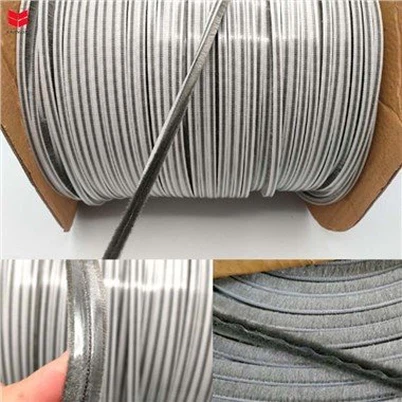
Yarn Is Classified By Spinning Method
Leave a message
1. Ring yarn
Ring spun yarn refers to yarn twisted by traditional spinning methods on the ring spinning machine. The fibers in the yarn are intertwined and connected, and the yarn has a compact structure and high strength. However, since the twisting and winding work is completed by a set of mechanisms at the same time, the production efficiency is limited. These yarns are versatile and can be used in all types of fabrics, braids, ropes.
2. Free end yarn
Free-end yarn means that the fibers are condensed and twisted into yarn in the high-speed rotating rotor flow field or in the electrostatic field. The twisting and winding of the yarn are completed by different components, so the efficiency is high and the cost is low. lower.
3. Air-flow yarn
Air-jet yarn is also called rotor spinning, which uses airflow to condense, twist and output fibers into yarn in a high-speed rotating spinning cup. The yarn structure is fluffier than ring-spun yarn, wear-resistant, even and dry, and dyed brighter, but its strength is lower. This kind of yarn is mainly used in bulky and thick plain cloth, flannelette and knitted fabrics with good hand feeling in woven fabrics.
4. Electrostatic yarn
Electrostatic yarn is a yarn made by coagulating and twisting fibers by electrostatic field. The yarn structure is the same as air-flow yarn, and the use is also similar to air-flow yarn.
5. Vortex yarn
Vortex yarn is a yarn spun by a fixed vortex spinning tube instead of a high-speed rotating spinning cup. There are more bent fibers on the yarn, the strength is low, and the evenness is poor, but the dyeing and wear resistance are better. This kind of yarn is mostly used in fleece fabrics, such as fleece, sportswear and so on.
6. Dust cage yarn
Dust cage yarn, also known as friction spinning, is a yarn spun by a pair of dust cages to condense and twist the fibers. The yarn has a layered structure, the yarn core has a large twist and a hard hand, and the outer layer has a small twist and a soft hand. Such yarns are mainly used in industrial textiles, decorative fabrics and also in outerwear (e.g. work clothes, protective clothing).
7. Non-free end yarn
The non-free end yarn is another kind of yarn spun by a new spinning method different from the free end yarn, that is, during the twisting process of the fiber, the two ends of the fiber strip are held, not free ends. This new type of yarn includes self-twisting yarn, air-jet yarn and core-spun yarn.
8. Self-twisting yarn
Self-twisting yarn is a new type of yarn with non-free ends. The reciprocating rollers apply twist to two yarns. When the yarns are parallel and close together, they are twisted and twisted into yarn by the force of untwisting and rotating. . This kind of yarn has uneven twist, and there are untwisted sections on one yarn, so the yarn strength is low. It is suitable for the production of wool yarn and chemical fiber yarn, and it is more suitable for use in colored fabrics and suede fabrics.
9. Air-jet yarn
Air-jet yarn is a high-speed jet vortex generated by compressed air, twisting the sliver, and spinning the yarn through wrapping and twisting. The yarn structure is unique, the yarn core is almost untwisted, the outer fibers are randomly wrapped, the yarn is loose, the hand feels rough, and the strength is low. This type of yarn can be processed into woven and knitted fabrics, making men's and women's jackets, shirts, sportswear and work clothes, etc.
10. Core-spun yarn
Core-spun yarn is a kind of yarn spun with filament as the core and wrapped with short fibers. It has the advantages of core filaments and outsourced short fibers, so that the yarn-forming performance exceeds that of a single fiber. Commonly used yarn core filaments include polyester filaments, nylon filaments, and spandex filaments, and cotton, polyester/cotton, acrylic fibers, and wool are commonly used for outsourcing short fibers. Core-spun yarn is mainly used as sewing thread, shirt fabric, burn-out fabric and elastic fabric, etc.